ServicesDual Tank Water Filtration
Dual Tank Water Filtration in Ojai
A dual tank system puts two tanks to work on the water coming into your home. One filters out chlorine taste and sediment. The other handles the minerals that leave scale on fixtures. We install it with your floors covered and sweep up the work area before we leave.
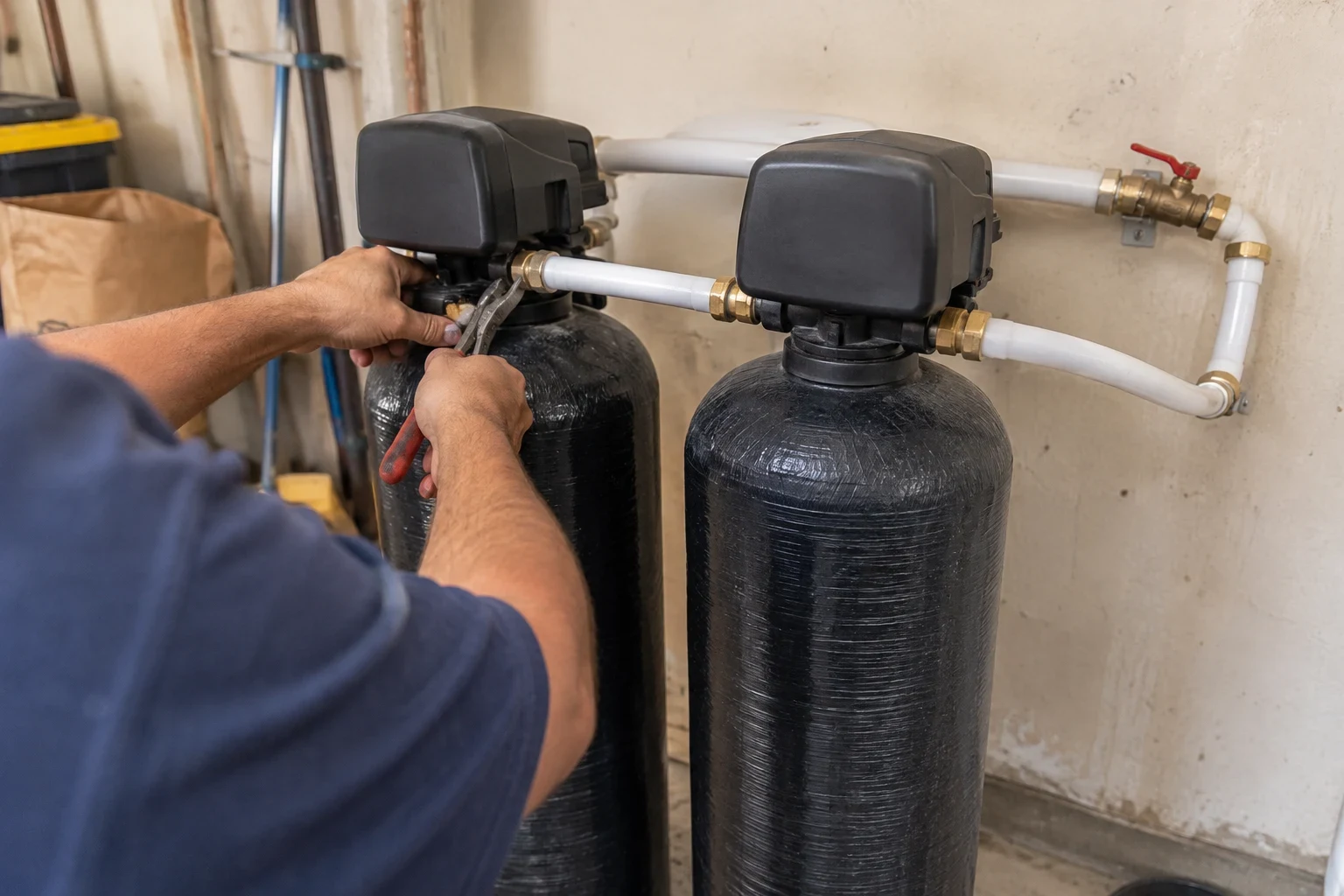
Two tanks, each with its own job
A single-tank filter tries to do everything in one vessel. A dual tank system splits the work. Water passes through the first tank, where filter media catches sediment and reduces chlorine taste and odor. It then moves into the second tank, which deals with the hardness minerals that build up as white crust on faucets, shower glass and the inside of your water heater.
Because the tanks sit where water enters your home, every tap gets treated water: the kitchen, the bathrooms and the laundry. It is the right call when you are dealing with both taste and scale. If drinking water is your only concern, a reverse osmosis system under the kitchen sink may be enough, and we will tell you so.
Spotty dishes, crusty showerheads and appliances that wear out early are the kinds of things people mention when they reach out. We start by listening to what you are seeing before we recommend anything.
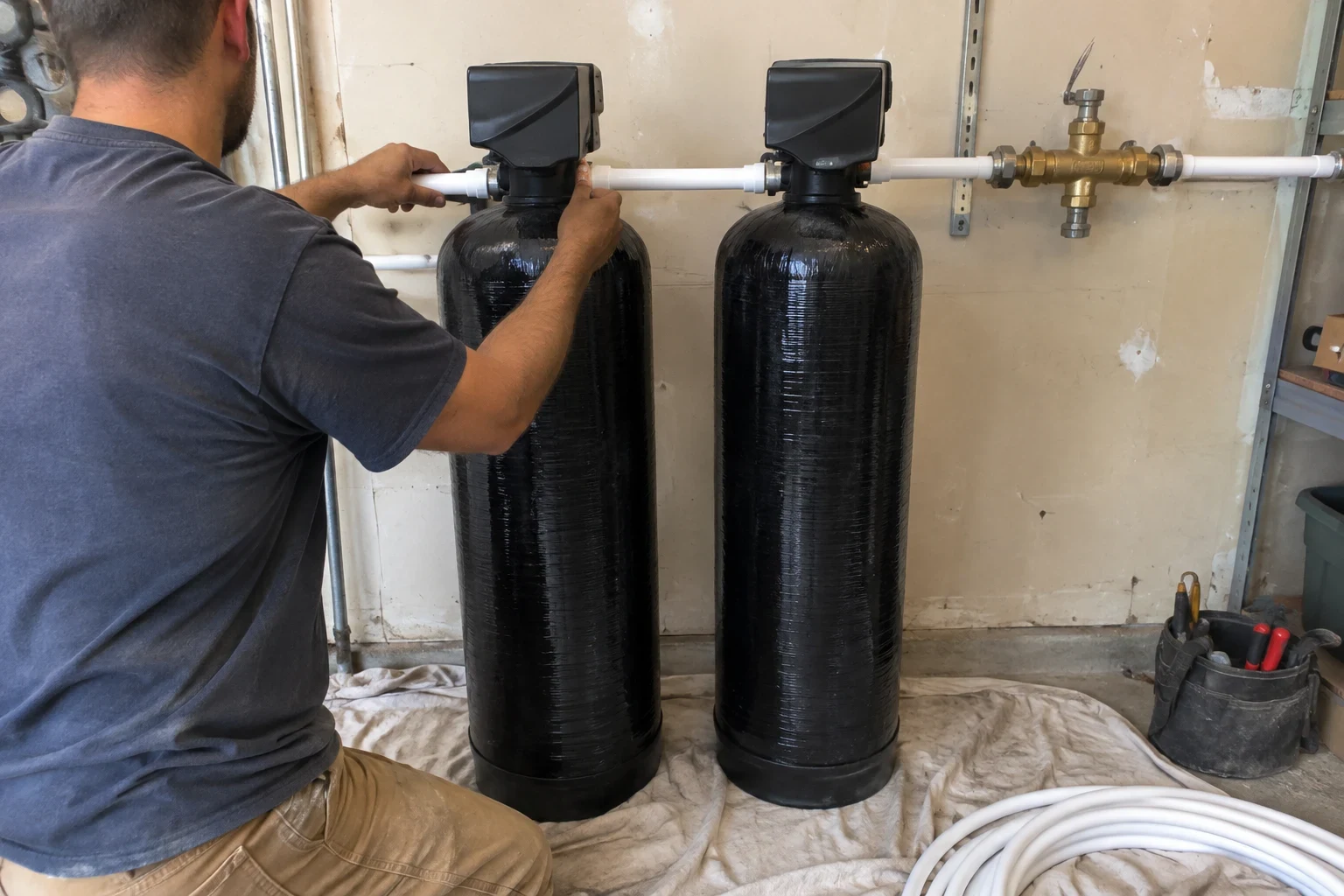
What your dual tank install includes
- 01
Filtration tank with carbon media
The first tank is packed with media that cuts chlorine taste and odor and catches fine grit. It is the stage you notice most in a glass of tap water.
- 02
Mineral tank and brine tank
The second tank takes on hardness, supported by a brine tank that keeps it recharging. We pour the first load of salt in for you at no charge, so there is nothing to buy before the system starts working.
- 03
Bypass valve and connections
A bypass valve lets the system be serviced or switched off while water keeps flowing to your home. We match the fittings to your main line so pressure holds steady.
- 04
A properly routed drain line
Regeneration cycles need somewhere to send rinse water. We route the line to a suitable drain, often a laundry standpipe or floor drain, and include an air gap.
- 05
Floor protection and cleanup
Drop cloths are laid out before the toolbox opens. Once the work wraps up, we wipe the area down and haul away boxes, pipe offcuts and old fittings.
- 06
A short lesson on your new system
Before we leave, we show you where the salt level should stay, how to read the control head display and how to use the bypass if you ever need it. The goal is that you feel comfortable with the equipment right away.
Questions about Dual Tank Water Filtration?
Call(805) 254-7348Signs a dual tank system fits your home
White crust that keeps coming back
Scale that returns a few days after you scrub it points to hard water. A filter alone will not fix it. The second tank will.
A chlorine smell from the tap
If your water smells a little like a pool, the carbon stage takes care of it across the whole house, not only at the kitchen sink.
Dry skin and stiff towels
Hard water keeps soap from rinsing off fully. Many people notice softer laundry and less film in the shower once both tanks are working.
Water heater and dishwasher trouble
Popping sounds from a tank water heater, or glasses that come out cloudy, can mean minerals are building up inside your appliances.
You have outgrown the pitcher filter
A pitcher covers a few glasses of drinking water. It does nothing for showers, laundry or the coffee maker.
How install day goes
- 1
It begins on the phone
Call and describe what you dislike about your water and where the main line enters the house. We ask how many people live there and how many showers and fixtures the system will supply, so the tanks match your daily use, and we give you your quote over the phone.
- 2
Covering the route and the spot
We lay drop cloths from your door to the install location and all around it. For a garage install, we work around your cars and stored belongings without disturbing them.
- 3
Connecting both tanks
After shutting off the water, we cut into the main line and install the bypass, the two tanks and the drain line. Your water is only off while the line is open.
- 4
First run and drip check
We flush the system, program the regeneration schedule on the control head, fill the brine tank with salt and inspect each joint for leaks.
- 5
Tidy-up and a tour
We take the packaging and pipe scraps with us, sweep the floor, pick up the drop cloths and show you how everything works.
What affects the price
Our offer is simple: Free install (we cover the cost). Your quote covers the equipment, and the right equipment depends on your home's size and plumbing. We go over each line of the quote on the call so nothing is left unclear.
- Tank size
- Larger households and homes with more bathrooms need bigger tanks so the system keeps up between regeneration cycles. A tank that is too small runs short; one that is too large costs more than it needs to.
- Filter media
- Standard carbon handles chlorine taste well. Some homes do better with an upgraded carbon that lasts longer and costs more up front.
- Placement and plumbing parts
- A long run from the main line to the install spot, or an outdoor location that needs a protective cover, adds parts to the job.
- Pairing with other systems
- Some homeowners add a reverse osmosis unit at the kitchen sink for drinking water. That is a separate system, quoted on its own.
Common questions about two-tank systems
What does the second tank add over a one-tank filter?
Single-tank units are generally designed for one issue, usually chlorine taste. With a filtration tank working alongside a mineral tank, you get help with taste and scale together. If only one of those bothers you, we will say so and point you to a simpler option.
Will it lower my water pressure?
When the tanks are sized for the house and the fittings suit the main line, most people feel no difference. A pressure drop usually means the system is undersized for the household, which is why we ask about your daily water use before quoting.
How often will I need to add salt?
That comes down to your water's mineral content and your household's daily use. Checking the brine tank once a month works well, and you pour in a bag when it runs low. We fill it at install and point out the line that tells you to add more.
Where do the tanks go?
Usually the garage, a utility room or outdoors near where water comes into the house. The location needs some floor space, a nearby drain and an outlet for the control head. We talk through the options with you and protect any area we work in.
Will the install make a mess inside my house?
We cover the floors before starting and keep tools and parts in a single staging area. Cleanup happens throughout the job, old fittings and boxes go with us, and we wipe down the area before leaving.

Better water at every tap, and a tidy home after
Tell us what you are seeing at the faucet and where your water line comes in. We work in Ojai, Meiners Oaks, Oak View and the surrounding area.