ServicesWell Water Filtration
Well Water Filtration in Ojai
Sulfur smell from the shower, rust rings in the toilet, sand in every faucet screen. We install a filter system matched to your well and the way your family uses water, keep your floors covered during the work and tidy up completely before we head out.
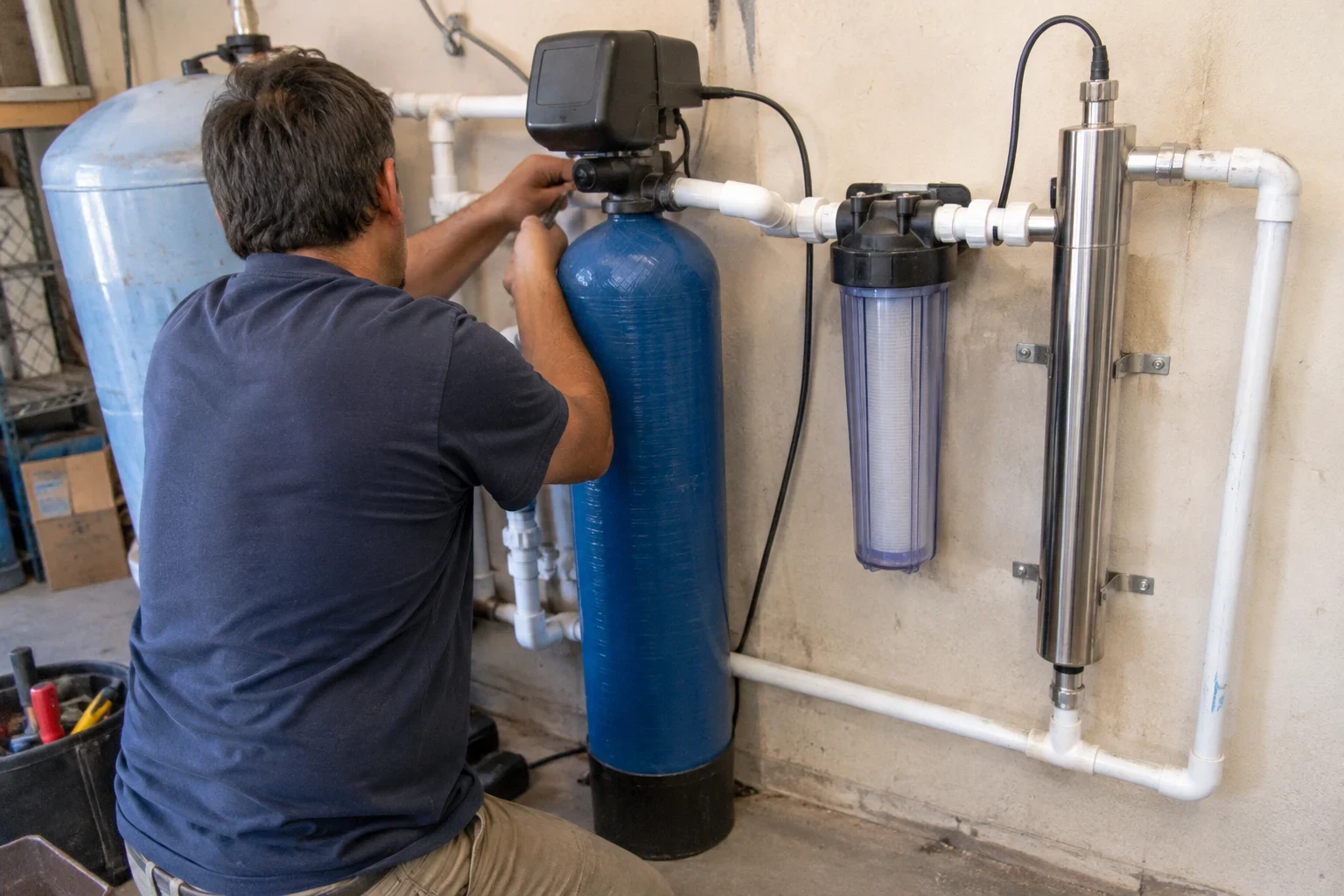
Filtration built around your own well
A private well is different from a city line. Nobody upstream is filtering it for you, and what comes out of the tap depends on the ground your well draws from. Sediment, iron, manganese and hydrogen sulfide are the usual culprits behind stains, smells and clogged fixtures.
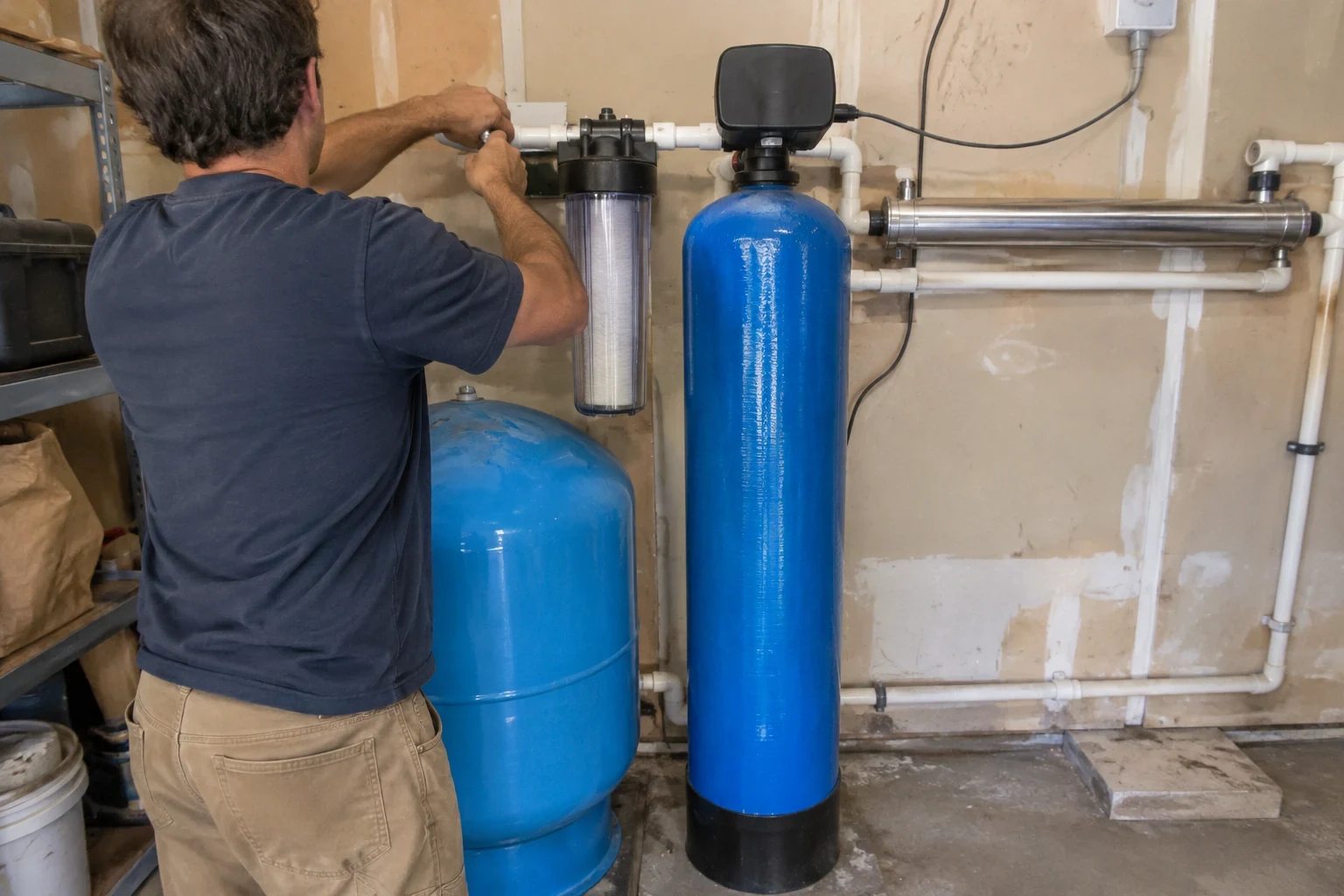
We install the filter where the water enters your home, usually right after the pressure tank, so every faucet and appliance gets the cleaner water. The system is matched to the problems you are actually seeing and to how much water your household uses, not to a one-size package.
Most of our well work happens in garages, utility closets and pump houses around Ojai and the Ojai Valley. We treat those spaces with the same care as your kitchen: drop cloths down, tools on mats and every bit of packaging hauled away when we leave.
What your well filter install includes
- Checking where the water comes in
- Before anything else, we inspect the pressure tank, the supply pipe and the room around them. That shows us where the system will sit and whether any lines need rerouting.
- A sediment stage up front
- Nearly every well setup begins by trapping sand and grit. Stopping that debris early protects the main filter and helps it last.
- Main media chosen for your water
- Iron, rotten egg odor and staining each respond to different filter media. We select the one that matches your symptoms and any report you have on hand.
- A bypass and leak-free fittings
- A bypass valve lets water keep running if the system is ever down for service. We tighten and check every joint for drips, then tag the valves so you can tell them apart.
- Covered floors and a cleared-out work area
- Protection goes down before we start cutting pipe. At the end we wipe surfaces, sweep and carry out every box, cap and pipe scrap.
Signs your well water needs filtering
A rotten egg odor
When the smell is worst from the hot tap, hydrogen sulfide is the likely cause. It is unpleasant, but a filter handles it well.
Rust-colored rings
Orange or brown marks in sinks, tubs and toilets usually mean iron. Darker gray or black streaks can point to manganese.
Sand in faucet screens
Clogged aerators and showerheads that need rinsing again and again mean grit is moving through your pipes, wearing down valves and appliances along the way.
Water that shifts through the year
Some wells turn cloudy after big winter storms or taste different in a long dry spell. Filtration keeps what reaches your taps more consistent.
Off-tasting coffee or dingy whites
A metallic taste, or white towels that slowly go dull, are quieter clues that minerals are getting through.
What shapes the cost of well water filtration
We offer free install (we cover the cost), so the money you spend goes toward the system itself. The right equipment depends on what your well carries and how much water your home goes through. We walk you through the options on the phone and again at the visit, so you know exactly what you are choosing before we pick up a wrench.
What the water carries
Plain sand and grit can be handled with a simpler setup. Iron combined with a sulfur smell usually calls for more stages and more media.
How much water you use
A big family or a house with several bathrooms needs equipment that keeps pace at peak times without pressure sagging. That often means larger tanks.
Space and pipe changes
An open garage wall beside the pressure tank keeps parts to a minimum. A cramped closet, or a pump house that needs a new run of pipe, adds fittings and labor.
A drinking water stage at the sink
Some households add reverse osmosis under the kitchen sink for cooking and drinking. That is a second system, priced on its own.
How a well filter install goes
- 1
Start with a call
Tell us what you notice in your water and how your well and tank are arranged. If you have any paperwork on your water, have it nearby.
- 2
We look at the space
At the visit we check the pressure tank, the pipe size and the room you have to work with. Then we explain which system makes sense and the reason for it, without jargon.
- 3
Install day, floors covered
We put down drop cloths, give you a heads-up, then turn off the water and plumb the system in after the pressure tank. The water is off for a stretch of the job, not the whole day.
- 4
Flush, check and show you around
We run water through the new system, look over every joint and show you the bypass and how filter changes work. Then the work area gets cleaned and the packaging leaves with us.
Well water filtration questions
Do I need a lab report before you install anything?
No. If you already have a report on your well, bring it out and we will go over it together, because it helps us choose the media. If you do not have one, the symptoms you describe go a long way. Orange stains, a sulfur odor and gritty screens each point us toward a particular setup.
Will a filter lower my water pressure?
It should not, as long as the system is the right size for your home. When pressure drops after an install, the usual reason is an undersized filter that cannot keep up with how fast your household draws water. That is why we ask how many people live with you and measure your pipe before recommending anything.
Where does the system go?
In most homes it sits just past the pressure tank, in a garage, utility area or pump house. Placing it there means every tap and appliance gets filtered water. We agree on the exact spot with you before any pipe is cut.
How messy is the install?
Very little, if we do our job right. We cover the floor before setting tools down, put pipe offcuts and packaging straight into our own bins, and sweep and wipe the space at the end. If our path runs through your house, we cover that route as well.
How often does the filter need attention?
That depends on the system and how heavy your well's iron or sediment load is. The sediment cartridge is usually the part you change most often, while the main media lasts much longer. At the walkthrough we show you the signs to watch for and how to flip the bypass when service time comes.
Is a dual tank system better for a well?
It can be, especially for homes that use a lot of water or have heavy iron. With two tanks, one keeps filtering while the other refreshes, so you are never caught short. Our Dual Tank Water Filtration page explains it in more detail, and we can talk it over at the visit.
Ready for well water you do not have to scrub off?
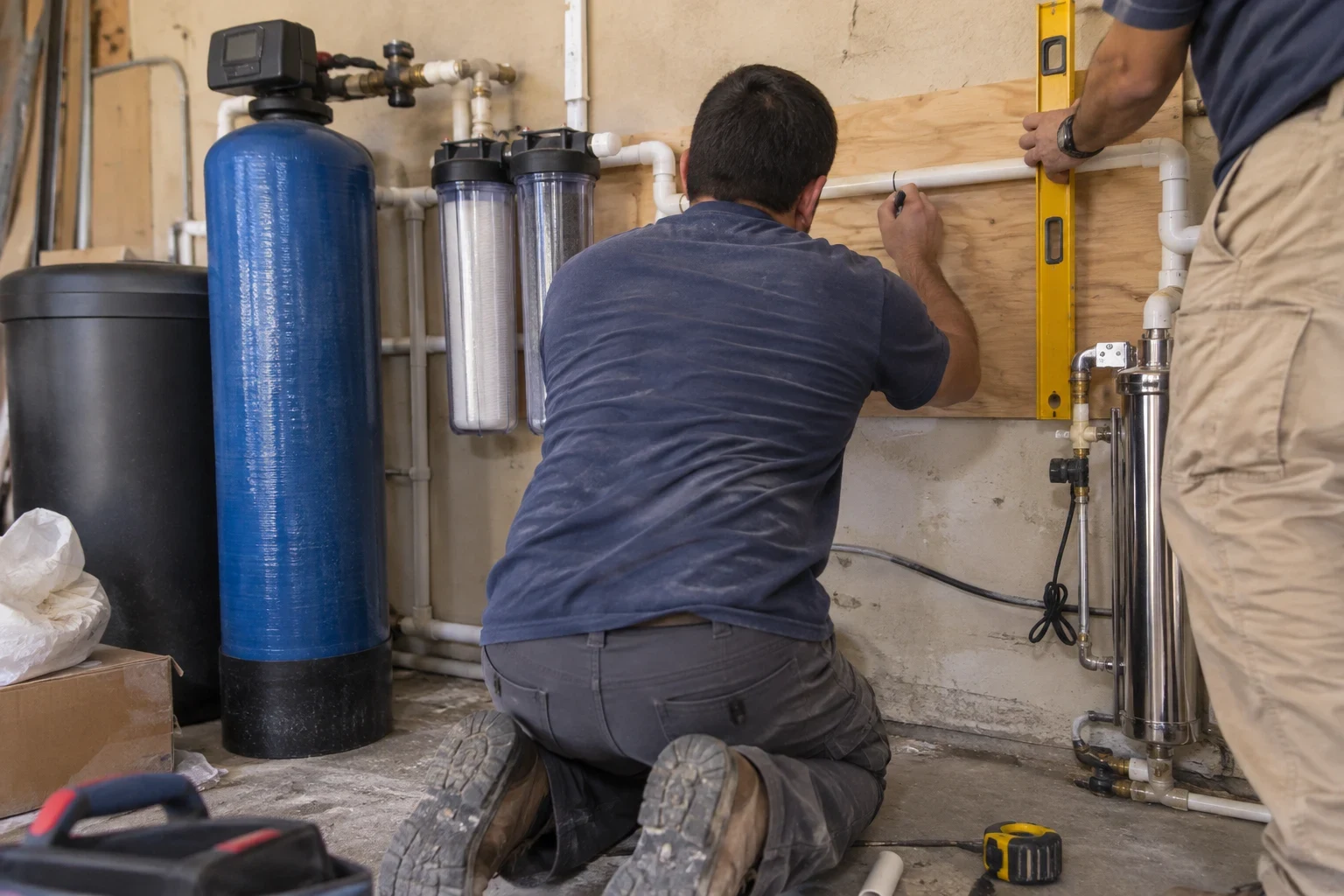
Tell us what your well is doing and we will explain which filter makes sense for your home. We serve Ojai, Meiners Oaks, Oak View and nearby towns.